
We don't do this for us, we do it for them - Jess Opens Up About Worldschooling her Quebec Family in the Dominican Republic and Beyond

Hi, I'm Jess, a mom from Quebec, Canada, raising three amazing kids: Quinn, who's now 13 and has that strong, independent boss energy; Cadence, 10, who's super adaptable and always rolling with changes; and Kai, 9, our high-energy little adventurer who's already picking up languages like a sponge. Before COVID, we had what looked like a pretty traditional setup—a big house, me handling all the backend business work, their dad running the operations, and the kids going off to school every day. We were working so hard, doing a lot, but in reality, we barely got to spend real time with them. Then COVID hit Quebec hard: schools closed completely, no online learning like in other places, so the kids were home for months with not much structure or activity. That's when it really sank in—we were missing their childhood. They're only young once, and here we were, feeling like prisoners of our house because of lockdowns and all these requirements we didn't fully believe in.
It sparked this deep realization that we wanted—and needed—a different life. So we made the leap: sold our large house and almost everything in just six weeks (terrified travel bans might come any day), and moved to the Dominican Republic in September 2021. I'd never even visited the DR before, but a friend who'd gone there earlier shared how safe it felt, protected by mountains from hurricanes, no major cartels or earthquakes like in Haiti, politically relaxed, and way more affordable than Costa Rica or the land-ownership worries in Mexico. We did Zoom calls with her and others to learn the practical stuff—shipping belongings, insurance, residency paths from Canada—and the easy in-and-out flexibility sealed it. We landed knowing someone local, which helped a ton, even though the first spot up in Panorama Village near Sosúa was secluded, no car, and totally overwhelming at first. But that's how our worldschooling adventure truly started—messy, scary, exciting, and all for them.

What drew you to the DR specifically, and how did homeschooling become part of the picture?
The DR choice came straight from that friend—I saw her post on Facebook or Instagram about moving there over the summer, so I reached out and asked why. She explained it was safe from climate risks like hurricanes because of the mountain range on this side, no big earthquakes (those hit Haiti instead), the political climate was quite lax with no cartels or major issues. We'd considered Costa Rica, but it was very expensive and required border runs; Mexico had the cartel stories and you can't own land outright, just lease for life. The DR felt more affordable back then—five years ago, cost of living wasn't bad—and it gave us that flexibility: pay your exit fee, easy visas, no expensive border runs. Knowing people already there made a huge difference—they shared tips on shipping, insurance, residency, everything.
We came to this area because they had chosen it, and having that connection really smoothed things. When we arrived, my plan was to find a local school, but it was all so overwhelming—new country, no transport, figuring out basics. Meanwhile, the Quebec government started asking questions because if you pull kids from school, they want proof of where they're learning—homeschool registration or international school transcripts with all the paperwork. I wasn't ready to commit to a school yet, so we registered for homeschooling to buy time. The first year was quite loose; I wasn't a teacher, I didn't really know what I was doing, and I had three kids in different grades with different learning styles. It was my year of figuring it out. Kai was in kindergarten, which isn't mandatory, so less pressure there—no need to report everything. A lot of families around us were unschooling, just letting kids be kids, but with the government watching closely, we couldn't go fully that route; we have to show progress and follow certain guidelines.

If there wasn't that government pressure, would you have gone more unschooling style? What's your honest take on it?
Honestly, sometimes I don't fully understand the whole unschooling notion. The families I've seen doing it basically let their kids just be kids, which I totally get and respect, but I could also see in some cases it was more for the parents' sake—because they didn't have the time, energy, or capacity to really sit and learn alongside them. For me personally, I think I'd land somewhere in the middle, a hybrid approach. There are certain basics I really want them to have, like learning to read and write properly. If they didn't pick that up naturally or from me gently guiding, like "Hey, let's read some stuff together," I'm not sure they would on their own. And with Kai being dyslexic, I've learned firsthand that there are specific tools and methods that can help him, but it takes dedicated time and work from me as the parent. In some unschooling setups, it feels like there's less active parent involvement, and that wouldn't work for us.
I prefer them learning from doings—real projects, cooking, baking, hands-on stuff that makes it fun. But I do need some structure because without it, we all get lost. You have to build on foundations—you're not jumping into algebra before mastering addition and subtraction. That progression helps everyone feel grounded. At the same time, I try to make as much of it enjoyable and less about sitting in front of a book all day, because that's usually the part they resist the most.
How are you funding this lifestyle? It's often the biggest barrier for families considering worldschooling.

Yes, it's absolutely the number one question and the biggest stoppage for people looking into this. For us, it works because I spent half my life in corporate, buying properties along the way, and now I rent those out for passive income—that's what funds our day-to-day life. When we're in Canada, I can pick up some work here and there, and in places like the DR where the cost of living is much lower, it stretches further, though making money locally isn't always easy, so sometimes creative side things for extra "bonus" stuff. Right now as a solo parent, that's my setup; their dad is mostly in Quebec, still working the business and funding his side that way. Everyone does it differently—remote jobs, savings, rentals—but having that passive base from earlier years has given us the freedom to live like this without constant hustle.
What about communities, hubs like The Hive in Cabrera, or other ways you've connected for learning and support?
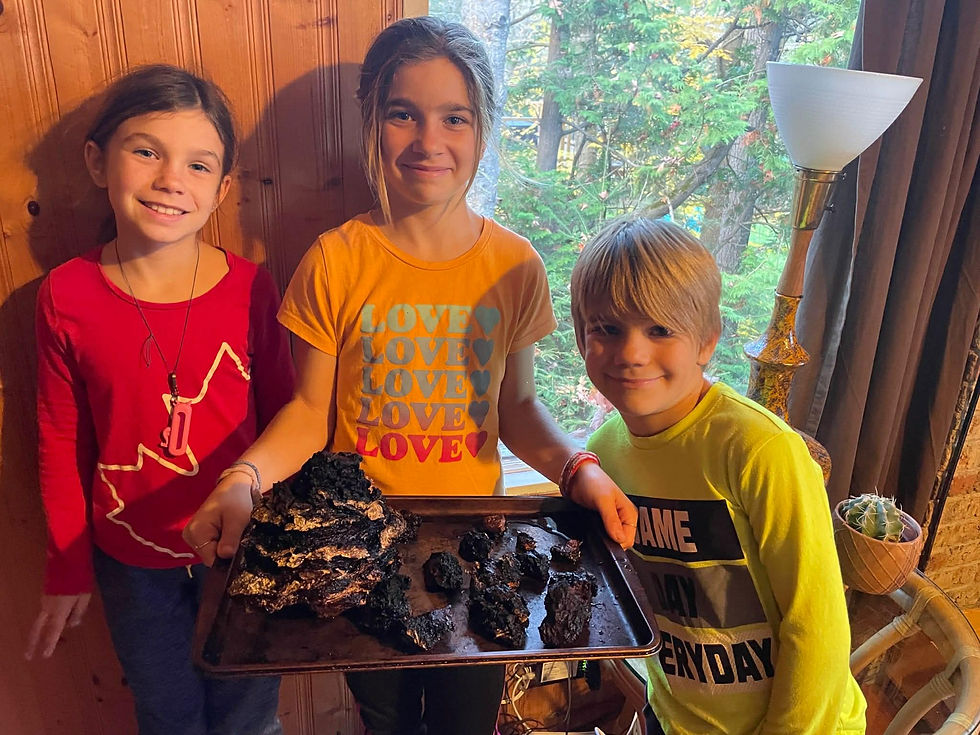
We did try a few international schools here in the DR, but often they felt more like glorified daycares—not deep or in-depth enough for what we wanted. Then we moved onto a farm, and suddenly there were so many natural opportunities: permaculture work, interns coming from all over the world, WOOFers sharing skills and stories, crafts, different people teaching the kids in real time. It turned into its own little hub without even trying—they were spending time with adults from everywhere, learning hands-on.

We actually tried partnering with The Hive in Cabrera too—she came by our farm, and we prepared everything to host a hub right there, setting up spaces and planning activities—but unfortunately, there weren't enough sign-ups to make it happen. It was disappointing, but it motivated me to create our own things instead. For example, one of my favorite projects was organizing a coral restoration day. I reached out to a local school in Sosúa, bought a coral nursery through an organization, and the kids went out with other groups to swim and collect fragments from the reef. They brought them back to the beach, glued or stuck them onto these steel domes, and then we boated out to sink one next to an artificial reef structure so they could watch and understand the process. On the swim back to shore, though, everyone got stung by jellyfish—every single kid but me! I was trying to hold them all, no life jackets, and it hurt so much they were hanging off me in the water. Chaos! But they still call it the best day ever. They learned right then why jellyfish populations are exploding (fewer turtles to eat them because the reefs are dying and turtles aren't coming as much), and they saw bleached, broken coral up close. That kind of real-life experience registers so deeply—every time we go to the beach now, they point it out and explain the ecosystem imbalance. Way more memorable than anything from a book.
We stick to the Quebec French curriculum as our main framework—French, math, science, history, English (I push English to a first-language level because the official second-language stuff is way too basic for their actual skills). I use it as a loose guide and adapt heavily, tying in real-life applications like the farm gardens, planting, worm farms, permaculture. That's my favorite part: taking the required structure and making it come alive through experiences. We haven't done super formal ongoing hubs or online schools because we move around a lot—spending time in Europe too (my partner is in Berlin, so we explore France, Belgium, Germany)—and hubs often require being in one spot long-term. Plus, with three kids, the costs add up quickly, and since my work is part-time maintenance now (I built the base years ago), I have the time to handle it myself.

What does a more typical day look like for you, especially back on the farm, and how do you make sure they get social time?
There really aren't strict typical days anymore, but we do have a rhythm that works best. We try to get up and do the school work— their "homework," but really just the curriculum part—as early as possible in the morning when they're fresh and focused. We've experimented with different times, and mornings win every time; usually, I can finish with all three by noon or lunch. Afternoons then open up for hands-on activities and free learning. On the farm, that meant various projects—permaculture, gardening—or Kai heading off to the river to fish. He learned at a really young age how to catch a fish, clean it, gut it, prepare it to eat, and cook it, which blows people's minds. We had a friend visit last year with his son the same age as Kai, who goes to regular school in a more structured setting, and he was floored watching Kai do things grown-ups sometimes can't handle.
Socially, it's something we actively seek out because they need their village. Social media is great for that—WhatsApp groups, Facebook homeschool communities. In the DR, there are lots of those groups, so we meet up for playdates, beach days, or whatever. Since other kids are in school during the day, afternoons work perfectly—if we finish early, they're ready to go play. Nothing's more distracting than having friends ready while you're still stuck on schoolwork. One of my kids has that high-energy, short-attention-span thing (maybe ADHD vibes, though I'd never diagnose), so I do his work in small chunks with breaks, rotating between the three. I know their personalities: the high achiever needs to go first and finish first, then little Kai, then the middle one. It takes juggling, but tailoring it like that makes everything smoother.

What have been the biggest struggles for you as the parent carrying this?
We don't do this for us—it's clear we do it for them. As parents, we're able to take on a lot of hard things for the sake of our children, and this is the same. But it is hard because you become not only their parent, you become the teacher too. You're with them 24/7 a lot of the time, which can strain the relationship—I'm seeing that now with my teenager; it's not always fun with me because I represent both mom and the "school" figure, and that doesn't always have a positive connotation, even though we do amazing activities, travel the world, things we would have loved as kids. But they don't know any different, so they don't see it as exciting or special; they just want a "normal" life sometimes. The grass is not always greener, and you get tired of what you have—only later do they realize.

My relationship with them is different from their dad's—he gets to just be dad, the fun one. Separation made it tougher: "I don't want to go to Mommy's because I don't want to do school; I want to go to Daddy's because it's just fun there." That's painful. There are days when everyone's tired, having a bad day, or the moon just isn't aligned—flexibility is a gift in homeschooling. If it's not working, we stop, take a break, try again later or tomorrow. What takes a full day in traditional school, we can do in two hours, so there's room to breathe.
Kai's dyslexia adds another layer—French is tough with all the grammatical rules, feminine/masculine things that don't always make sense—so we've got a tutor in Quebec helping with tricks and tools. That support has been huge. Exams come some years, and we prepare portfolios (like 50-page PowerPoints with proof of everything), but accommodations help—like a computer that reads the story for timed tests. The girls did really well overall; Quinn is strong and went to practice sessions at school to get comfortable with the environment and peers. One year she failed math, but it's partial—combined with the year's work, I assess if they progress. Cadence had her elbow broken the morning of an exam—huge trauma, surgery, rescheduled days later when everything was fresh in mind—and still, explaining the context got her through.
Now the girls are back in regular school, loving the friends, cliques, preteen/teen social stuff like Valentine's cards and flowers. It's bittersweet—they get up super early for the bus, which is awful, but the consistent social piece was missing before. Even on the farm or in Europe communities, there were always people around, but not the same steady friends.
If you could go back and tell yourself something when you were just starting, what would it be?
First, I would not put so much pressure on myself. Coming from that corporate background, I felt like everything had to happen on a certain day, stick to the schedule, push through. But with kids, there's no real schedule—that fluidity took me time to accept, and letting go earlier would have saved a lot of stress and fights.
You kind of grow into it, figuring out what feels best for your family at each stage. Open mind, open schedules help, especially with all our moving. The pressure still gets to me sometimes—government timelines, exams, wanting them to enjoy it all—and when they're not happy, I take it personally: "I'm giving you this amazing life, and you're still not happy?" But that's just being a kid; they can't fully comprehend the sacrifices yet. Financially, we live small now—no more big retirement savings like before; we took the risk thinking if it doesn't work, we can go back later. But once you've lived outside the traditional grind, going back to a 9-5 feels like a shock. You've seen so much, made friends worldwide, and restarting life constantly is draining.

Relationships can take a hit too—we started this adventure together, but the constant starting over, pushing outside comfort zones, it can make you or break you. It broke us after a while, which is a reality for a lot of families making big moves. Beautiful things come too—I met my current partner here—but it adds complications, juggling more countries now. Do it for them, release the pressure where you can, and embrace the glitter and fireworks along the way.


Comments